How to Clean Ceiling Fans in St. Louis
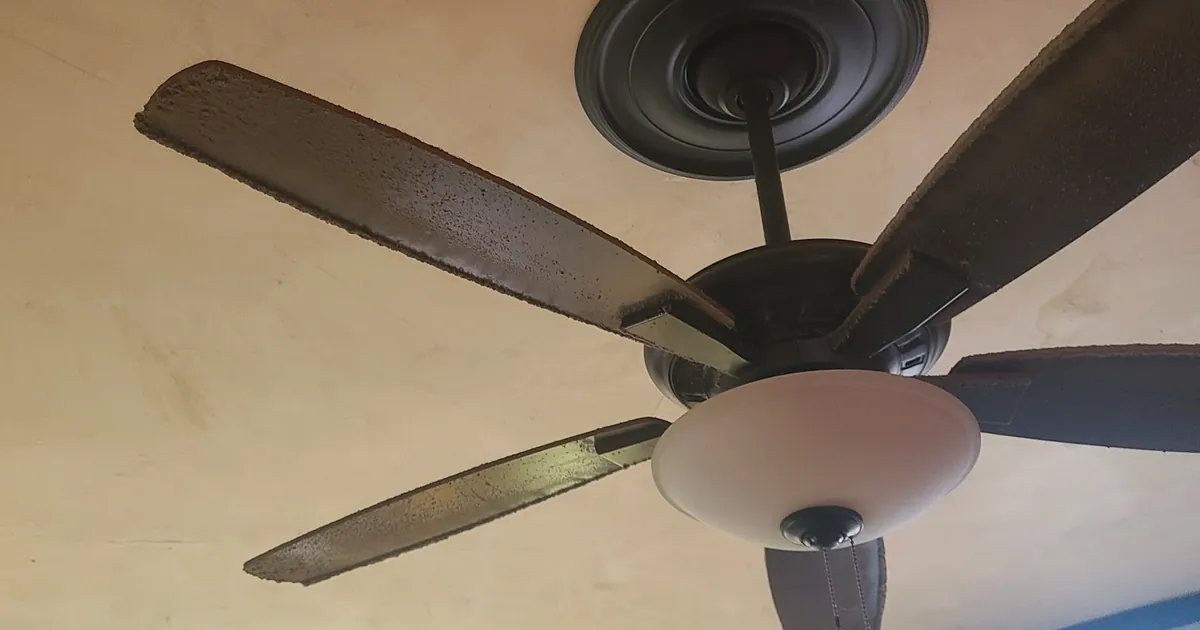
Clean ceiling fan blades with a pillowcase trap method, followed by a damp microfiber cloth pass on both surfaces. Clean motor housing with compressed air. Repeat every 4–6 weeks during active-use months in St. Louis.
| Cleaning frequency | Every 4–6 weeks (active season), quarterly (winter) |
| Time per fan | 8–12 minutes with pillowcase + microfiber method |
| Professional standard | 275°F steam detail on blades + HEPA floor extraction after |
Jason Ellis
Operations Director, Clean Town & Country · St. Louis, MO
Why St. Louis Ceiling Fans Get So Dirty So Fast
I have cleaned homes across Clayton, Kirkwood, and Webster Groves for years, and ceiling fans are consistently one of the most neglected surfaces in a home — and one of the most consequential. St. Louis's climate is part of the reason. The Missouri River valley creates elevated humidity from spring through early fall. Humidity causes dust particles to carry a slight electrostatic charge that makes them bond to fan blades rather than simply settling on them. A blade that looks clean from below can carry a quarter-inch dust ridge on the leading edge after six weeks of use.
The second factor is operation cycle. During peak St. Louis summer — when temperatures regularly exceed 95°F and the heat index climbs higher — ceiling fans run for 12 to 16 hours a day. That continuous airflow pulls fine particles from flooring, upholstery, and HVAC vents and deposits them onto the blade surfaces through a process called electrostatic adhesion. By August, a fan that has been running since May has cycled through months of accumulated particulates.
This matters beyond aesthetics. Every time the fan runs, it re-circulates what is on the blades into the room air. In homes where anyone has allergies, asthma, or respiratory sensitivity, dirty ceiling fans are a direct source of airborne particle load. Cleaning them regularly is a functional health intervention, not just maintenance.
What Happens Inside the Motor Housing
Most cleaning guides stop at the blades. The motor housing is where the real accumulation problem lives. Ceiling fan motors draw air across their internal coils to prevent overheating — the same airflow that cools the motor deposits fine dust and lint into the housing vents. Over time, this accumulation increases thermal resistance, which causes the motor to run hotter and draws more current. In older homes across Maplewood and University City — where fans may be original equipment from the 1980s or 90s — this buildup is a meaningful contributor to both efficiency loss and early motor failure.
The fix is straightforward: compressed air into the motor vents once or twice per year, directed downward to push debris out rather than deeper in. Never use liquid cleaners near motor housing. Water and electrical components are incompatible at any concentration.
How to Clean a Ceiling Fan: 5-Step Method
Turn off the fan and let blades come to a full stop
Never clean a moving fan. Wait at least 30 seconds after switching off. Position a stable stepladder directly below the fan center — not offset to one side, which creates tipping risk. Have your supplies within arm's reach before climbing.
Slide a pillowcase over each blade and drag it off in one slow motion
This traps the surface dust layer inside the case rather than releasing it into the air. Use a dedicated cleaning pillowcase — not one from your linen closet. Work from the base of each blade to the tip in a single smooth stroke. Repeat on all blades before shaking out or laundering the pillowcase.
Wipe both blade surfaces with a damp microfiber cloth
Lightly dampen commercial-grade microfiber — not dripping. Wipe the top surface first, then the underside. For stubborn residue (common after summer humidity cycles), a surfactant-dampened cloth removes bonded particulates that dry wiping leaves behind. Work top-to-bottom: top of blade, underside of blade, light fixture globe if present.
Clear motor housing vents with short compressed air bursts
Use a standard compressed air can at 6–8 inches from the vent openings. Direct bursts downward and away from light fixtures. Three to four short bursts per vent is sufficient — continuous blasting forces debris deeper into the housing. Place a drop cloth below before this step; the discharge falls straight down.
HEPA vacuum the floor directly below the fan
The pillowcase method captures most surface dust, but micro-particles always fall during cleaning. A HEPA-equipped vacuum run immediately after fan cleaning prevents those particles from re-settling into carpet or hard floor joints. This step is especially important in homes with young children who spend time on the floor.
Seasonal Ceiling Fan Cleaning Schedule for St. Louis
St. Louis has a distinct four-season pattern that affects ceiling fan use — and therefore cleaning frequency. In Chesterfield and Town and Country MO, most homes run fans heavily from late April through early October. That six-month active season is when four-to-six-week cleaning intervals matter.
- Late April (fans start): full clean + motor housing compressed air before the season begins
- Every 4–6 weeks May through September: blade wipe with pillowcase + microfiber
- Early October (fans winding down): full clean before switching to winter reverse mode
- January: single motor housing inspection if fans run in reverse for heat distribution
Most homeowners do not track individual cleaning dates. The practical version: if you cannot see a clean line where you run your finger across a blade, the fan is overdue. In our experience, fans that have gone a full summer without cleaning typically require a damp wipe plus a second dry pass — the single-wipe approach leaves a residue film.
When Ceiling Fan Cleaning Connects to a Whole-Home Deep Clean
Ceiling fans are not isolated surfaces. In a full deep clean sequence, ceiling fans are cleaned first — before counters, baseboards, or floors — precisely because the fallout from blade cleaning settles onto every surface below. Our teams run a 275°F steam pass on blade surfaces as part of a whole-home deep clean, which removes bonded particulates and cleans surfaces without liquid overspray near the motor. The HEPA extraction that follows at floor level captures what falls during the process.
For homeowners who are doing this themselves between professional visits, the five-step method above replicates the essentials of that sequence without specialized equipment. The key difference: our move-in and move-out cleans include every fan in the home as a standard line item, because fans are one of the surfaces most consistently missed by the previous occupant.
If your home has cathedral ceilings or fans installed at 18 feet or higher, DIY cleaning becomes a genuine safety issue. Fans at that height require professional extension equipment — not a standard stepladder. We see this frequently in newer homes across Ladue and Frontenac, where two-story great rooms with high fan installations are common.
Related Guides
About the Author
Jason Ellis is Operations Director at Clean Town & Country, a family-owned residential cleaning company serving St. Louis, MO. In his years overseeing cleaning operations across Chesterfield, Clayton, Kirkwood, and the surrounding area, Jason has developed systems for high-touch surfaces — ceiling fans, baseboards, and appliance interiors — that most cleaning routines skip. He holds $2M in professional liability coverage and works exclusively with background-checked Certified Cleaning Specialists.
Clean Town & Country
Rather Not Spend Your Weekend On This?
We handle standard, deep, and move-out cleaning across the St. Louis metro. Tell us about your home and we will send you a free quote — no obligation.
Insured & bonded • HEPA filtration • Satisfaction guaranteed
Frequently Asked Questions
Common questions about ceiling fan cleaning from St. Louis homeowners.
How often should you clean ceiling fans in St. Louis?
Every four to six weeks during active use seasons — spring through early fall when fans run daily. In winter, quarterly is sufficient. St. Louis humidity causes dust to bond to blades more stubbornly than in drier climates, so higher frequency prevents buildup that requires aggressive cleaning to remove.
What is the best way to clean ceiling fan blades without spreading dust?
Slide a pillowcase over each blade and drag it off — the case traps the dust instead of releasing it into the air. Follow with a damp microfiber cloth for residue. Never use a feather duster or dry cloth, which displace dust onto surfaces below.
Can cleaning ceiling fans improve air quality in my home?
Yes, significantly. A dusty fan redistributes accumulated particulates — pet dander, pollen, skin cells — every time it runs. In St. Louis homes where seasonal allergens are high, cleaning fans every four to six weeks measurably reduces the particle load circulated during operation.
Should I clean ceiling fans before or after the rest of the room?
Always fans first. Even with the pillowcase method, micro-particles fall onto surfaces below. Clean the fan, then move to counters, furniture, and finally floors. Reversing this order means the floor you just cleaned immediately collects fan fallout.
What do professional cleaners use on ceiling fans?
Professional teams use extendable microfiber dusters for reach, pillowcase technique for initial blade wipe, and dampened commercial microfiber cloths with a surfactant solution for residue. For motor housing, compressed air clears internal vent buildup without moisture contact.
Need a Professional Deep Clean in St. Louis?
Our St. Louis cleaning specialists serve Clayton, Kirkwood, Webster Groves, Chesterfield, and the surrounding area. Every deep clean includes ceiling fans, baseboards, and all high-touch surfaces — not just the obvious ones.