How to Clean Baseboards — St. Louis Home Guide
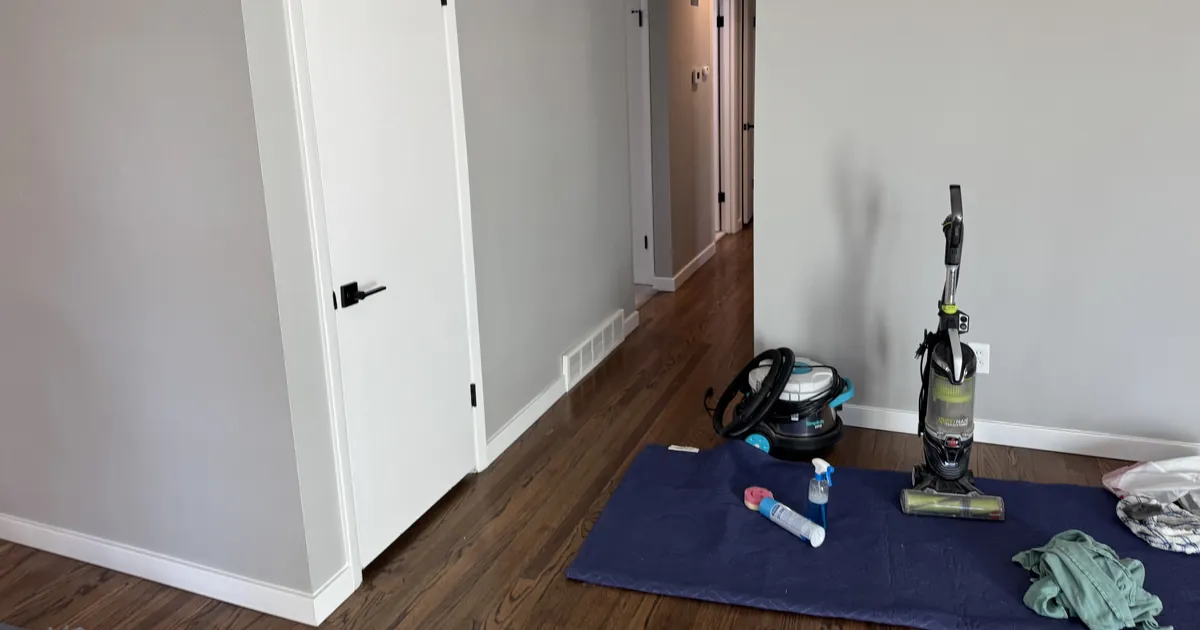
Dry-dust baseboards with a microfiber tool, scrub with a damp cloth and mild dish soap, dry immediately, then apply a dryer sheet to slow dust return. Takes 15–20 minutes per room.
| Metric | Detail |
|---|---|
| Recommended frequency | Every 4–6 weeks (light); quarterly (deep scrub) |
| Time per room | 15–20 minutes with proper tools |
| Professional service | Included in every Clean Town & Country visit |
Why St. Louis Baseboards Get Dirty Faster Than You Think
Baseboards sit at the intersection of foot traffic, airflow, and gravity — everything that travels through your home eventually settles near the floor. In St. Louis, that problem is compounded by the region's distinct seasonal swings.
From late spring through August, Missouri humidity pushes past 70% on a regular basis. Baseboards in homes near the Missouri River or in older neighborhoods like the Hill and Maplewood tend to feel slightly tacky during peak humidity weeks — tacky surfaces collect dust, pet hair, and pollen at a rate you would not see in a drier climate.
Then winter arrives, furnaces cycle constantly, and forced-air systems push fine particulate through every room. Baseboards near floor vents in Clayton, Webster Groves, and Chesterfield homes build visible grey lines within weeks of a thorough cleaning. Seasonal rhythm matters here more than a fixed schedule.
What You Need Before You Start
Having the right tools eliminates most of the frustration from baseboard cleaning. You do not need specialty products — you need the right sequence and the right surface contact.
- Microfiber cloths (at least 3 — one dry, one damp, one finishing)
- Flat mop head or extendable duster with flexible neck (avoids bending)
- Two buckets: one with warm water and a few drops of dish soap, one rinse-only
- Melamine foam eraser for scuffs and heel marks
- Lightly used dryer sheet for dust-repellent finish (optional but effective)
- Old toothbrush for carved or stepped baseboard profiles
Skip oil-based wood cleaners on painted baseboards — they leave a film that attracts more dust than it repels. Most St. Louis homes have standard semi-gloss or satin painted baseboards that respond well to plain damp-cloth cleaning.
The 5-Step Baseboard Cleaning Method
Sequence matters. Skipping the dry phase and going straight to a wet cloth pushes dry dust into the paint texture where it becomes harder to remove than if you had left it alone.
- Dry dust first. Run a microfiber duster or dry cloth along the entire top edge of the baseboard, then the face, then the floor-meets-baseboard crevice. Use your extendable tool so you stay upright throughout this pass.
- Scrub with the damp cloth. Wring your soapy microfiber cloth so it is damp — not wet. Wipe the baseboard top-to-bottom in sections of roughly 3 feet. Apply light pressure; the soap does the work, not the friction.
- Address scuffs with the foam eraser. After the soapy pass, any remaining marks are scuffs rather than dirt. A lightly dampened melamine eraser removes most heel marks in 2–3 gentle circular motions.
- Rinse and dry immediately. Go back over each section with your clean rinse cloth, then a dry cloth. Leaving moisture on painted baseboards in Missouri's humidity risks swelling and paint adhesion loss over time.
- Apply dryer sheet finish. Wipe a lightly used dryer sheet along the clean, dry surface. The residue is mildly anti-static and slows the return of dust by several weeks in most homes.
For carved or stepped baseboard profiles — common in older Kirkwood bungalows and pre-war homes in University City — use an old toothbrush to work the soapy cloth into grooves after step 2. These profiles trap visible build-up that a flat cloth misses entirely.
Room-by-Room Priority Order for St. Louis Homes
Not all baseboards degrade at the same rate. Prioritize based on foot traffic and moisture exposure:
- Kitchen and bathrooms first. Grease particulate from cooking and humidity from showers mean these rooms accumulate the most grime fastest. Monthly attention prevents build-up that requires a full scrub to remove.
- Entryways and mudrooms second. Every season brings something inside — salt in winter, pollen in spring, tracked mud in fall. These baseboards take the most physical contact from shoes and bags.
- Living areas and hallways third. High foot traffic but less moisture exposure. These respond well to the quarterly deep scrub plus monthly dusting routine.
- Bedrooms last. Lower traffic and typically less humidity than the rest of the home. Quarterly cleaning is sufficient in most cases.
If you follow a room-by-room cleaning checklist, baseboards slot into each room's floor-level phase — after vacuuming but before mopping, so any loosened debris gets picked up in the mop pass.
St. Louis Neighborhood Baseboard Profiles
Homes across the St. Louis metro have different baseboard profiles based on era and construction type.
Older homes in Maplewood, Webster Groves, and the Hill often have original wood baseboards with painted layers built up over decades. These are delicate — heavy scrubbing chips paint at the edges. Gentler technique and faster drying are essential.
Newer construction in Chesterfield, Ballwin, and St. Charles typically uses MDF baseboards with a factory-sprayed semi-gloss finish. These handle damp-cloth cleaning well when dried immediately after each pass.
High-rise and condo units near Clayton and the Gateway Arch corridor face a different challenge: HVAC recirculation in sealed buildings concentrates fine dust at floor level faster than in traditional houses. Monthly light cleaning is the practical baseline for these units.
Clean Town & Country
Rather Skip the Baseboards This Round?
Our cleaners include detailed baseboard cleaning in every St. Louis service visit — standard, deep, and move-out. Get a free quote and we will handle the whole home.
Insured & bonded • HEPA filtration • Satisfaction guaranteed
Frequently Asked Questions
How often should you clean baseboards in a St. Louis home?
Every 4–6 weeks for a light dusting pass, quarterly for a full scrub. Homes with pets, young children, or older HVAC systems near Forest Park or along the Missouri River tend to need the monthly pass more consistently, especially May through August.
What is the easiest way to clean baseboards without bending over?
Attach a microfiber cloth to a flat mop head or use an extendable duster with a flexible neck. Work top-to-bottom in 3-foot sections, dry dusting first, then wiping with a lightly dampened cloth. Standing upright throughout is fully achievable with the right extension tool.
Can you use a dryer sheet on baseboards?
Yes — as a finishing step after proper cleaning. A lightly used dryer sheet wiped along a clean, dry baseboard deposits a thin anti-static residue that repels dust for several weeks. It does not substitute for cleaning but meaningfully extends the time between needed passes.
What removes scuff marks from white baseboards?
A lightly dampened melamine foam eraser removes most heel marks and scuffs from painted baseboards in 2–3 light circular motions. Avoid heavy pressure on semi-gloss paint — it dulls the sheen in the area you scrub.
Should baseboards be cleaned before or after vacuuming?
After vacuuming, before mopping. Vacuuming lifts loose debris from floors so it does not get pushed onto freshly cleaned baseboards. Your mop pass then picks up anything that falls during baseboard cleaning — the same sequence our team follows as part of preparing for every visit.
Jason Ellis
Operations Director, Clean Town & Country
I have walked through several thousand St. Louis homes with our Certified Cleaning Specialists — everything from pre-war bungalows in Maplewood to new construction in St. Charles. Baseboards are consistently the most overlooked surface during a DIY clean and the first thing a trained eye catches when walking into a room. Getting the sequence right — dry dust, damp scrub, dry immediately — is the difference between a 15-minute task and a two-hour project.
Want every surface — baseboards included — handled by a background-checked cleaner?
Get a Free St. Louis Quote