Post-Construction Cleaning Checklist for St. Louis Contractors
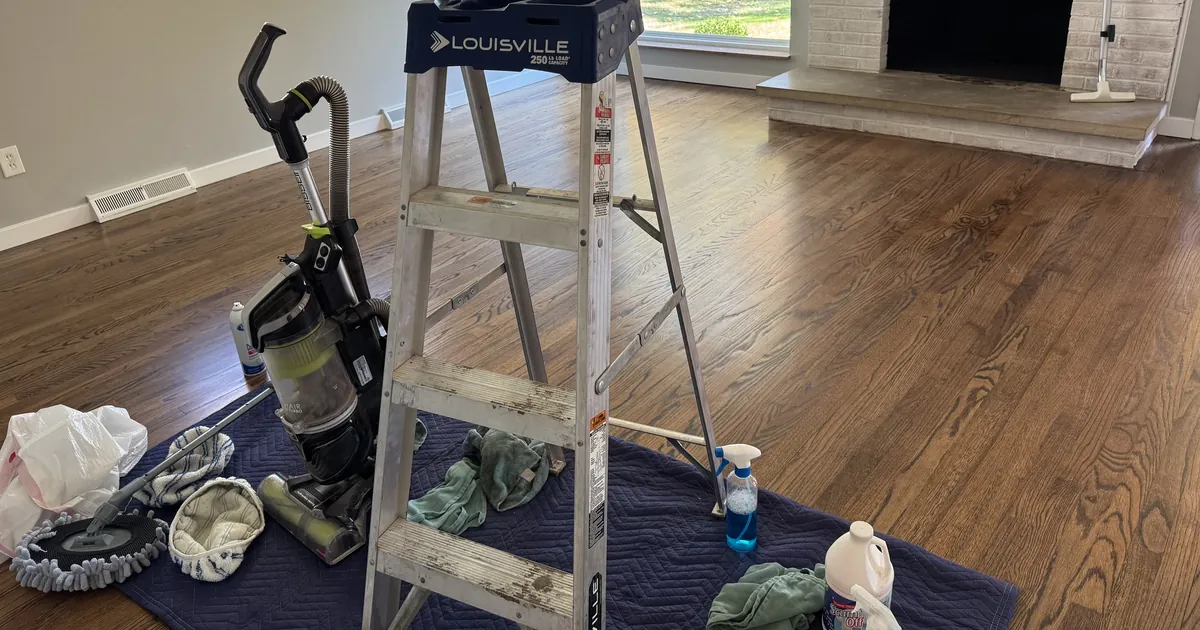
Most GC cleaning disputes happen at walkthrough — not because the space wasn't cleaned, but because the wrong crew used the wrong equipment at the wrong milestone. This checklist closes that gap.
Whether you're managing a new build in Chesterfield Valley, a luxury gut renovation in Ladue, or a commercial tenant fit-out in Clayton — here's what to verify before your cleaning crew gets on-site.
Why Contractors Need a Cleaning Verification Protocol
Post-construction cleaning failures rarely look like failure. The space looks clean — until the owner moves in and white residue reappears on every surface 48 hours later. This is The Settling Error: silica particles displaced by standard vacuums settle back onto surfaces after the crew leaves.
The result for your firm: punch-list callbacks, occupancy delays, and disputes with owners who paid for a clean handoff. A basic verification protocol — run before you sign off on any phase — eliminates 90% of these callbacks.
The 3-Phase Protocol we use was developed specifically to solve The Settling Error. Here's how to verify that any cleaning crew — ours or anyone else's — is executing it correctly.
Step 1: Verify Insurance Before Any Phase Begins
Before scheduling a single phase, confirm the following. This protects your firm in the event of equipment damage, surface scratching, or injury on your job site.
- General Liability — $1M–$2M minimum. Ask for the COI naming your firm as additional insured.
- Workers' Compensation — Required if the crew includes anyone other than the owner. No exceptions.
- COI Turnaround — A professional company issues COIs within 24 hours — same-day for preferred partners.
- Licensing — Missouri requires no specific cleaning license, but verify local business registration and any OSHA silica compliance certifications.
Step 2: Verify Equipment Before Crew Arrives
The single most important differentiator between a professional post-construction cleaning crew and a janitorial crew is equipment. Ask to see specs before the crew arrives on-site.
True HEPA Vacuums (Sealed Systems)
Acceptable: 99.97% filtration at 0.3 microns. Sealed system — no bypass.
Red flag: "HEPA-style" filters are unsealed and recirculate 30–40% of fine particles.
Air Scrubbers
Acceptable: Minimum 500 CFM with HEPA filtration. Creates negative air containment.
Red flag: Box fans or industrial fans — these spread silica through HVAC.
Steam Units
Acceptable: 275°F dry steam cleaning — residue-free decontamination of surfaces.
Red flag: Consumer-grade steamers below 200°F don't reach cleaning threshold.
Microfiber Systems
Acceptable: Color-coded, commercial-grade microfiber (not cotton rags). Prevents cross-contamination between phases.
Red flag: Standard cotton cloths spread silica and leave lint.
Phase-by-Phase Sign-Off Checklist
Each phase should have its own written sign-off before the next trade enters. These criteria are the minimum for a responsible handoff.
Phase 1 — Rough Clean (During Construction)
Scheduled before flooring installation. Goal: remove bulk debris and clear pathways for remaining trades. This is not a detail clean — it's site preparation.
- All large debris, packaging, and construction waste removed from all rooms
- Subfloor swept/vacuumed — no debris that will cause raised flooring
- Window frames wiped — overspray and plaster removed before glass installers arrive
- Pathways cleared to allow HVAC, electrical, and plumbing trades to complete work
- Dumpster or debris removal coordinated (not left in driveway for owner to handle)
Phase 2 — Detail Clean (After Fixtures Installed)
Scheduled after all fixtures, appliances, cabinetry, and countertops are installed. This is the silica extraction phase — every surface is HEPA-vacuumed and wiped down in the correct sequence (top-to-bottom, inside-out).
- HEPA vacuum of all surfaces — ceilings, walls, sills, built-ins — before wiping
- Window glass cleaned with plastic scraper only (no razor blades on tempered or coated glass)
- Quartzite and engineered stone countertops: pH-neutral only, no abrasives
- High-end appliance exteriors: stainless steel detailing with non-abrasive pads
- Cabinet interiors cleaned — all construction film, labels, and packaging adhesive removed
- HVAC return vents inspected and cleaned — prevents silica re-distribution after move-in
- All construction stickers and protective films removed from windows and fixtures
Phase 3 — Final Punch (Before Owner Walkthrough)
Scheduled 24–48 hours before the owner walkthrough. This phase assumes 24 hours have passed since Phase 2 — allowing any residual silica to fully settle. A crew that skips this 24-hour window is cutting corners.
- White-glove re-inspection of all surfaces — silica re-deposition after Phase 2 is caught here
- Touch-up any areas that settled since Phase 2
- Final HEPA pass on hard floors — especially tile grout lines and wood seams
- All fixtures polished to handoff-ready finish
- Final walkthrough with GC superintendent confirming completion criteria met
- Crew supervisor walks through with GC superintendent before departure
Final Walkthrough: An in-person review confirming silica remediation was completed per protocol. Ask for this at Phase 3 sign-off — it's part of our handoff process and protects against post-occupancy disputes. Our 3-Phase Protocol includes a final walkthrough on every project.
Want a Cleaning Partner Who Follows This Protocol?
CTC's Contractor Partnership Program includes priority scheduling, same-day COI, a dedicated account manager, and a final walkthrough on every final punch — for St. Louis GCs and design-build firms.
Clean Town & Country
Rather Not Spend Your Weekend On This?
We handle standard, deep, and move-out cleaning across the St. Louis metro. Tell us about your home and we will send you a free quote — no obligation.
Insured & bonded • HEPA filtration • Satisfaction guaranteed
Frequently Asked Questions
Common questions from St. Louis general contractors about post-construction cleaning requirements.
What insurance should a post-construction cleaning company carry?
At minimum: $1M–$2M general liability, workers' compensation, and commercial auto. Ask for a Certificate of Insurance naming your firm as additional insured. Responsible cleaning companies provide this within 24 hours.
What is the difference between HEPA and HEPA-style vacuums for construction dust?
True HEPA filters are sealed systems that capture 99.97% of particles at 0.3 microns — the size of crystalline silica. HEPA-style filters are unsealed and recirculate 30–40% of fine particles. For post-construction silica remediation, only True HEPA vacuums with sealed systems meet OSHA standards.
What happens at the final walkthrough?
After the final punch, we walk the space with the owner or GC to confirm silica remediation was completed, surface protocols were followed, and the space meets occupancy readiness standards. It's a handoff moment for the owner and protects the GC from post-occupancy disputes.
When should each phase of post-construction cleaning be scheduled?
Phase 1 (rough clean) before flooring installation. Phase 2 (detail clean) after all fixtures, appliances, and cabinetry are installed. Phase 3 (final punch) 24–48 hours before owner walkthrough or certificate of occupancy inspection.
How much does post-construction cleaning cost per square foot in St. Louis?
Post-construction cleaning rates vary by phase, debris type, and project complexity. New construction typically runs 1.5–2x residential cleaning rates due to silica handling equipment and multi-phase scheduling. Contact us for a project-specific quote — we price by scope, not per square foot, to prevent scope creep at Phase 3.
Ready to Partner on Your Next St. Louis Project?
Send us your project specs. We scope Phase 1/2/3 pricing within 4 hours and issue COI same-day for preferred partners.